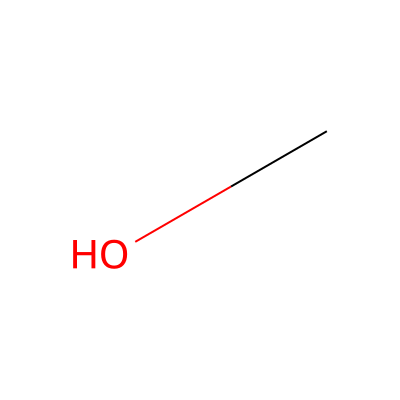
Methanol
| Associated curated AOPs from AOP-Wiki |
|---|
Associated AOPs with Level of Relevance 1
AOPs with at least 1 KE associated with chemical, where the KE(s) are neither MIE nor AO
| AOP Identifier | AOP Title | AO Classification | OECD Status | Coverage Score | KE Identifier | KE Name |
|---|---|---|---|---|---|---|
| AOP:48 | Binding of agonists to ionotropic glutamate receptors in adult brain causes excitotoxicity that mediates neuronal cell death, contributing to learning and memory impairment. | Developmental Disorder Of Mental Health | WPHA/WNT Endorsed | 0.11 | KE:352 | N/A, Neurodegeneration |
| AOP:97 | 5-hydroxytryptamine transporter (5-HTT; SERT) inhibition leading to population decline | Unclassified | - | 0.1 | KE:626 | Increased, serotonin (5-HT) |
| AOP:98 | 5-hydroxytryptamine transporter (5-HTT; SERT) inhibition leading to decreased shelter seeking and increased predation | Unclassified | - | 0.2 | KE:626 | Increased, serotonin (5-HT) |
| AOP:195 | 5-hydroxytryptamine transporter (5-HTT) inhibition leading to population increase | Unclassified | - | 0.12 | KE:626 | Increased, serotonin (5-HT) |
| AOP:203 | 5-hydroxytryptamine transporter inhibition leading to decreased reproductive success and population decline | Reproductive System Disease | - | 0.12 | KE:626 | Increased, serotonin (5-HT) |
| AOP:204 | 5-hydroxytryptamine transporter inhibition leading to increased reproductive success and population increase | Unclassified | - | 0.12 | KE:626 | Increased, serotonin (5-HT) |
| AOP:321 | Reduced environmental pH leading to thinner shells in Mytilus edulis | Unclassified | - | 0.09 | KE:10042 | Abnormal development |
| AOP:372 | Androgen receptor antagonism leading to testicular cancer | Endocrine System Disease; Reproductive System Disease; Cancer | - | 0.2 | KE:1616 | Malformation, cryptorchidism - maldescended testis |
| AOP:374 | Binding of Sars-CoV-2 spike protein to ACE 2 receptors expressed on brain cells (neuronal and non-neuronal) leads to neuroinflammation resulting in encephalitis | Nervous System Disease | Under Development | 0.25 | KE:352 | N/A, Neurodegeneration |
| AOP:450 | Inhibition of AChE and activation of CYP2E1 leading to sensory axonal peripheral neuropathy and mortality | Nervous System Disease | - | 0.14 | KE:352 | N/A, Neurodegeneration |
| AOP:500 | Activation of MEK-ERK1/2 leads to deficits in learning and cognition via ROS and apoptosis | Developmental Disorder Of Mental Health | - | 0.14 | KE:352 | N/A, Neurodegeneration |
| AOP:520 | Retinoic acid receptor agonism during neurodevelopment leading to impaired learning and memory | Developmental Disorder Of Mental Health | - | 0.2 | KE:2204 | Altered brain morphology |
| AOP:550 | Increased LMNA gene mutation leading to heart failure | Cardiovascular System Disease | - | 0.2 | KE:2066 | Altered Signaling Pathways |
| AOP:568 | Inhibition, 5-hydroxytryptamine transporter (5-HTT; SERT) leads to Inhibition, Feeding | Unclassified | - | 0.25 | KE:1320 | Increased, extracellular serotonin |
| AOP:569 | Decreased DNA methylation of FAM50B/PTCHD3 leading to IQ loss of children via PI3K-Akt pathway | Developmental Disorder Of Mental Health | - | 0.17 | KE:2195 | Increase, CNS Neural cell death |
Associated AOPs with Level of Relevance 2
AOPs with at least 1 AO associated with chemical, and no associated MIE
| AOP Identifier | AOP Title | AO Classification | OECD Status | Coverage Score | KE Identifier | KE Name |
|---|---|---|---|---|---|---|
| AOP:12 | Chronic binding of antagonist to N-methyl-D-aspartate receptors (NMDARs) during brain development leads to neurodegeneration with impairment in learning and memory in aging | Nervous System Disease; Developmental Disorder Of Mental Health | WPHA/WNT Endorsed | 0.12 | KE:352 | N/A, Neurodegeneration |
| AOP:260 | CYP2E1 activation and formation of protein adducts leading to neurodegeneration | Nervous System Disease | - | 0.14 | KE:1514 | Neurodegeneration |
| AOP:269 | Elevated ATP demand for detoxification and repair mechanisms leading to impaired growth and development | Unclassified | - | 0.17 | KE:10013 | Impaired growth and development |
| AOP:270 | Elevated ATP demand for detoxification and repair mechanisms leading to impaired locomotor activity | Unclassified | - | 0.12 | KE:10016 | Impaired locomotor activity |
| AOP:281 | Acetylcholinesterase Inhibition Leading to Neurodegeneration | Nervous System Disease | - | 0.1 | KE:352 | N/A, Neurodegeneration |
| AOP:288 | Inhibition of 17α-hydrolase/C 10,20-lyase (Cyp17A1) activity leads to birth reproductive defects (cryptorchidism) in male (mammals) | Endocrine System Disease | - | 0.12 | KE:1616 | Malformation, cryptorchidism - maldescended testis |
| AOP:498 | Increased LCN2/iron complex leading to neurological disorders | Nervous System Disease | - | 0.25 | KE:2150 | Neurological disorder |
| AOP:501 | Excessive iron accumulation leading to neurological disorders | Nervous System Disease | - | 0.25 | KE:2150 | Neurological disorder |
| AOP:532 | Retinoic acid receptor agonism during cerebellar development leading to impaired locomotor function | Unclassified | - | 0.2 | KE:2231 | Locomotor function. Impaired |
DISCLAIMER
TICToK is a knowledgebase of chemicals found in tattoo inks, compiled from publicly available regulatory and scientific resources. The chemical classifications presented in this knowledgebase are derived from multiple publicly available resources and are provided solely for informational purposes, and they are neither authoritative nor binding. The chemical-AOP mappings compiled in this knowledgebase serve as plausible hypotheses for research, and further experimental validation is required to definitively establish these potential toxicity mechanisms. The authors bear no responsibility for any errors, omissions, or inconsistencies originating from these external sources. Users are advised to exercise independent judgment when interpreting chemical classifications and any other data provided in this resource. Importantly, our sole goal to build this resource on tattoo ink chemicals is to enable future basic research on this topic, and it does not necessarily reflect the views or objectives of our employers or funders.