Rhipicephalus annulatus
Unique identifier: 61
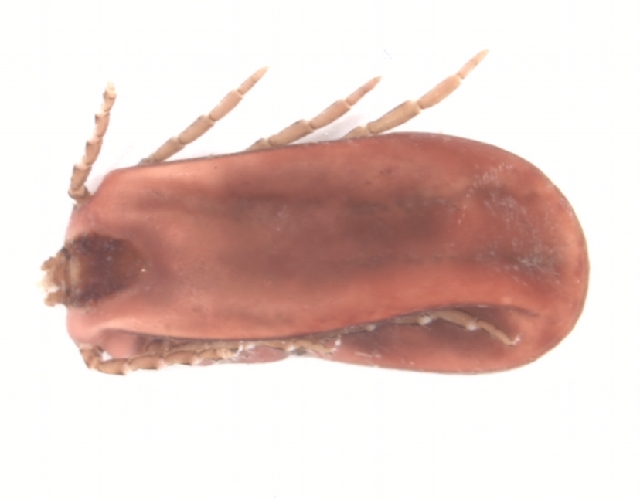
© Centre for Biodiversity Genomics Photography Group (CC BY)
Tick Identification Methods
| Detail | Study Period | Reference |
|---|---|---|
| Morphologically identified under stereomicroscope with standard keys and PCR amplification | September 2018 - April 2019 | PMID:39825388 |
| Morphological identification, sequence analysis and phylogenetic analysis | - | PMID:36435168 |
| Morphological identification | - | PMID:31014536 |
| Morphological identification using standard keys and molecular characterization | - | PMID:31489558 |
Tick Collection Methods
| Detail | Study Period | Reference |
|---|---|---|
| Cattle farms | - | PMID:31014536 |
| Flagging method | 2015-05-01 | PMID:27692988 |
General Environmental Conditions
| Detail | Study Period | Reference |
|---|---|---|
| Around house and gardens | September 2018 - April 2019 | PMID:39825388 |
| Low temperature, and increase in rainfall, and relative humidity | July 2017–June 2018 | PMID:40398984 |
Seasonal Conditions
| Detail | Study Period | Reference |
|---|---|---|
| Northeast-Monsoon | July 2022 to June 2024 | PMID:40121049 |
| July 2017–June 2018 | PMID:40398984 | |
| Summer | July 2022 to June 2024 | PMID:40121049 |
| July 2017–June 2018 | PMID:40398984 | |
| Winter | July 2022 to June 2024 | PMID:40121049 |
| July 2017–June 2018 | PMID:40398984 | |
| Southwest-Monsoon | July 2022 to June 2024 | PMID:40121049 |
| July 2017–June 2018 | PMID:40398984 |
DISCLAIMER
TickMapKB is a database of tick species, their distribution, and associated data, compiled from published literature and publicly available sources. The authors are not liable for any inaccuracies or omissions in this resource. This database is intended to support research on tick ecology and distribution and does not necessarily reflect the views or objectives of the authors’ affiliated institutions or funders.